

when fiction and reality...
... collide in a dungeon.

For the last six to nine months, I’ve been on a LitRPG and Progression Fantasy kick. Dungeon Crawler Carl, He Who Fights with Monsters, I’m Not the Hero, Azarinth Healer, We are Legion (We are Bob) are all series I’ve either read or listened to. And, there are countless others I haven’t even started (be forewarned though, it’s quite a bloody genre, think more Game of Thrones than Lord of the Rings).
At first, I thought I connected with this genre due to my long history as a gamer. I’ve played countless RPGs (Role-Playing Games) where you create a character and take them through the paces until they become powerful enough to survive the end game, the final villain, or complete the main quest.
That kind of progression has always appealed to me. The simple notion that we’re not done yet. That we haven’t and may never peak as long as there are opportunities to grow. There is always a chance we might level up given the right opportunities and experiences.
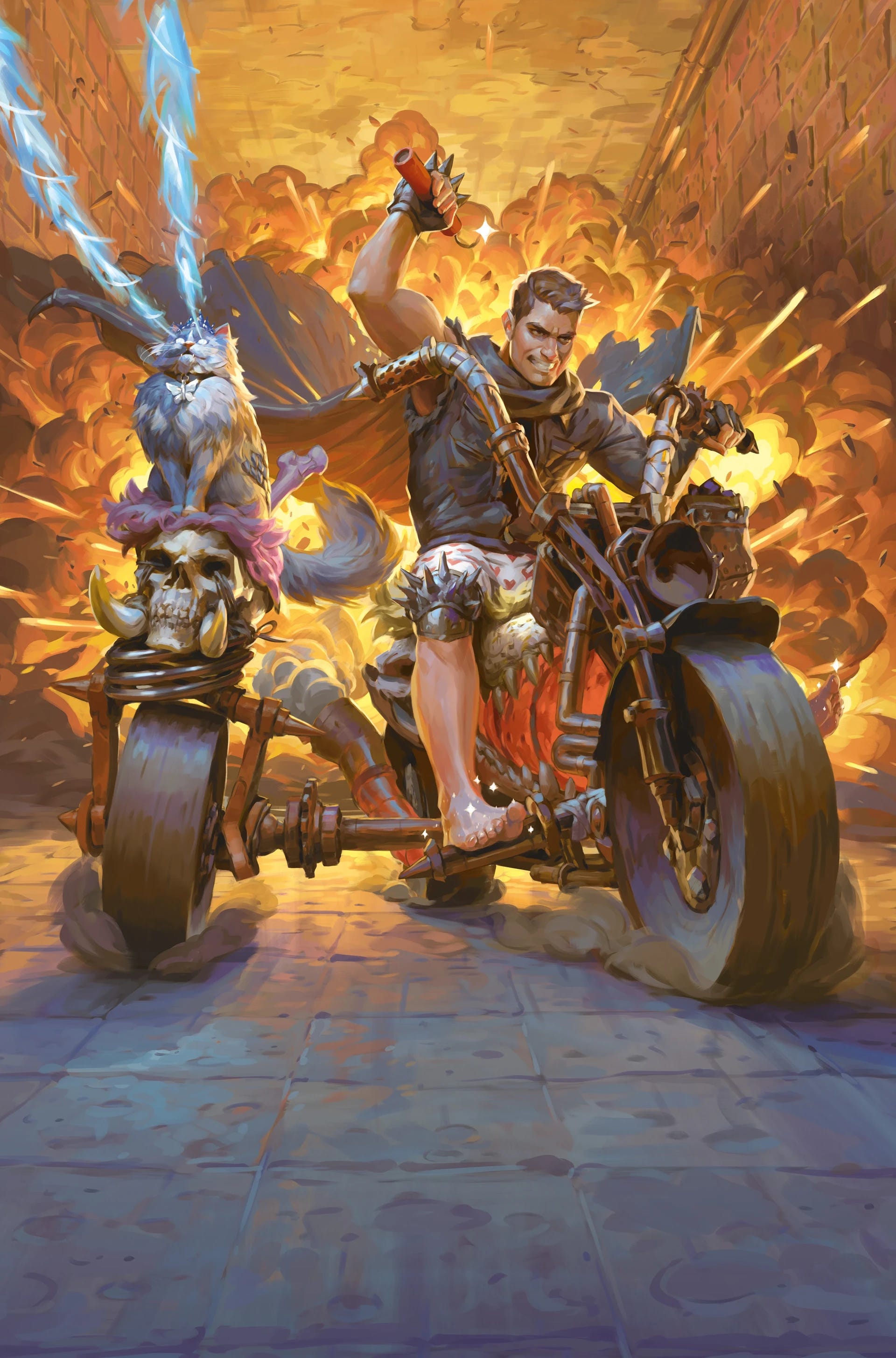
That’s the core of the LitRPG and Progression Fantasy formula, that people can change, can grow, can become the person they fantasize about becoming. Sure, the characters go through unimaginable trauma at times and face difficult choices and battles (not to mention the plot armor they all seem to have), but they move toward something. Maybe it’s a better skill or spell, a new understanding or opportunity, or just higher stats or level.
The idea is that no matter where they are, that is not the peak of their power or possibilities.
The more I thought about my connection to this genre, the more I began to understand what drew me into being a therapist, the possibility and probability of change.
I meet a lot of people in therapy who are convinced that their current build is permanent.
“This is just who I am.”
“I’m bad at relationships.”
“I sabotage good things.”
“I’m too anxious, too much, too broken, too shut down.”
In other words, the kind of people who confuse their current stats with a fixed identity. They assume the story is over because of what they read on their character sheet.
I first began to explore this in my doctoral program, not knowing the personal can of worms it would open.
There was process philosophy and its emphasis on our interconnectedness and the near constant potential for change.
There was narrative therapy and its understanding of story and our power to accept or reimagine and resist their power as we take stands and cocreate identities.
There was the freeing notion of complexity in human identities and the idea that we have multiple identities, performances, that we live out every day.
There was neuroscience and neuroplasticity, the idea that repetition changes our brains and patterns of engaging the world. That we can quite literally change our patterns and perceptions with practice.
And, now fifteen years after my graduation I find myself hooked again on change and sense that LitRPG offers a strangely hopeful vision of being human:
We are not fixed.
We are not finished.
We are in process.
A sense that effort matters. Even when the world is absurd, there’s still a way for us to engage it. We grind, adapt, fail, re-spec, try again.
Therapy isn’t a game. Pain is real. Trauma is real. Depression doesn’t care how clever your metaphor is.
But therapy, at its best, can challenge us. It says: maybe those things that feel constricting now are what kept us alive then.
And, now, now it’s time to level up…
Maybe that’s why I find such a connection to the genre. Beneath the mechanics and monsters, it tells a deeply therapeutic truth:
life is adaptive,
identity is flexible,
and change is possible.
Not easy. Not clean. Not guaranteed.
But possible.
And sometimes, on the hardest days, possible is more than enough.